
What is Karate
Nochikan Karate International is a leading karate academy based in Thrissur, Kerala, with over 20 years of excellence in martial arts training. We offer comprehensive programmes designed to build physical strength, mental discipline, self-confidence, and character for students of all ages and skill levels.
At our dojo, we teach Karate in its purest and most traditional form, guided by the core values passed down by masters over centuries. Unlike commercialized versions that focus only on combat or showmanship, we believe Karate is a way of life—one that shapes you into a stronger, more disciplined, and more compassionate human being.
The True Meaning of Karate
Nochikan Karate International is a leading karate academy based in Thrissur, Kerala, with over 20 years of excellence in martial arts training. We offer comprehensive programmes designed to build physical strength, mental discipline, self-confidence, and character for students of all ages and skill levels.
Traditional Karate does not promote unnecessary violence. Instead, it teaches :
- Self-control over aggression
- Mental strength over brute force
- Peace and justice over conflict
Karate trains you to master your mind first, because your mind defines who you are. Through rigorous training, perseverance, and discipline, practitioners learn how to face hardships calmly and emerge stronger—both physically and mentally.
Karate is a journey of inner awakening, a form of moving meditation that transforms not just the body, but the spirit.
Etiquette and Discipline in Karate
Respect and discipline form the foundation of Karate training. Every student is expected to follow certain traditional etiquettes that cultivate humility and mindfulness.
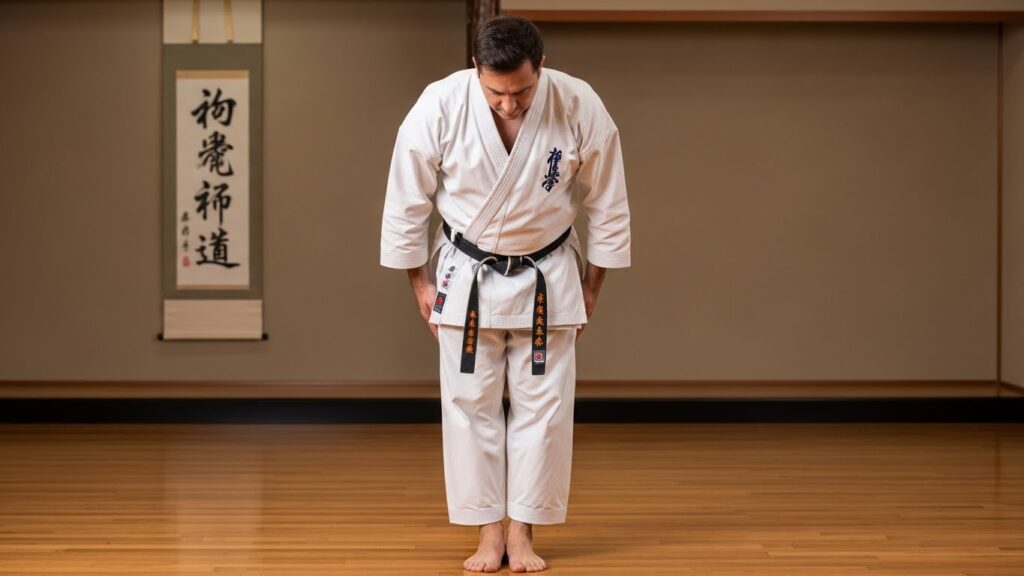
Standing Bow
Stand with heels together and toes slightly apart in a “V” shape. Bend forward from the waist at about 20 degrees, then return to an upright position.
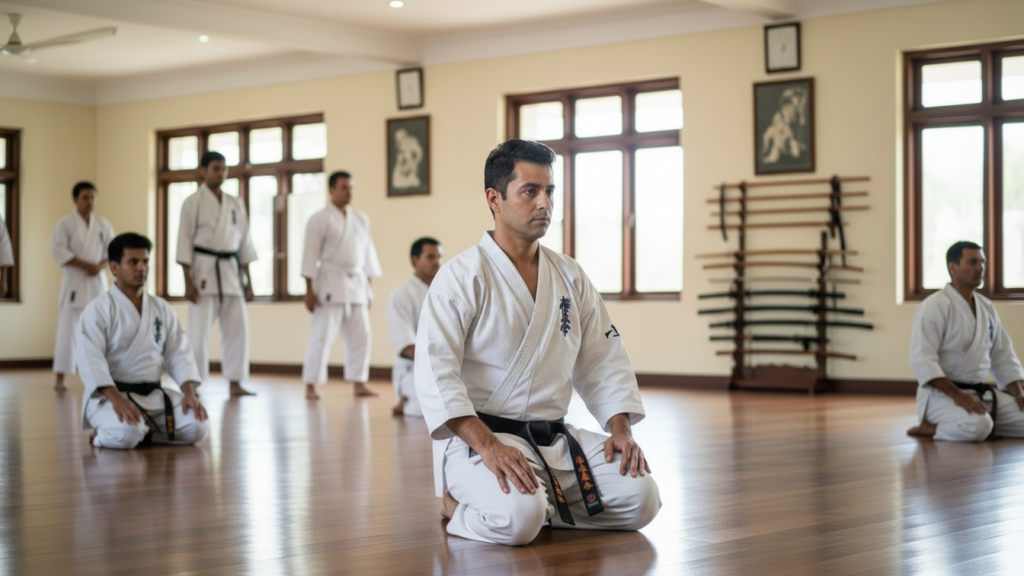
Kneeling (Seiza)
Kneel by placing the left knee on the floor, followed by the right. Sit on your feet with your big toes touching. Keep your back straight, shoulders relaxed, and place your hands on your thighs with fingers together and pointing inward.
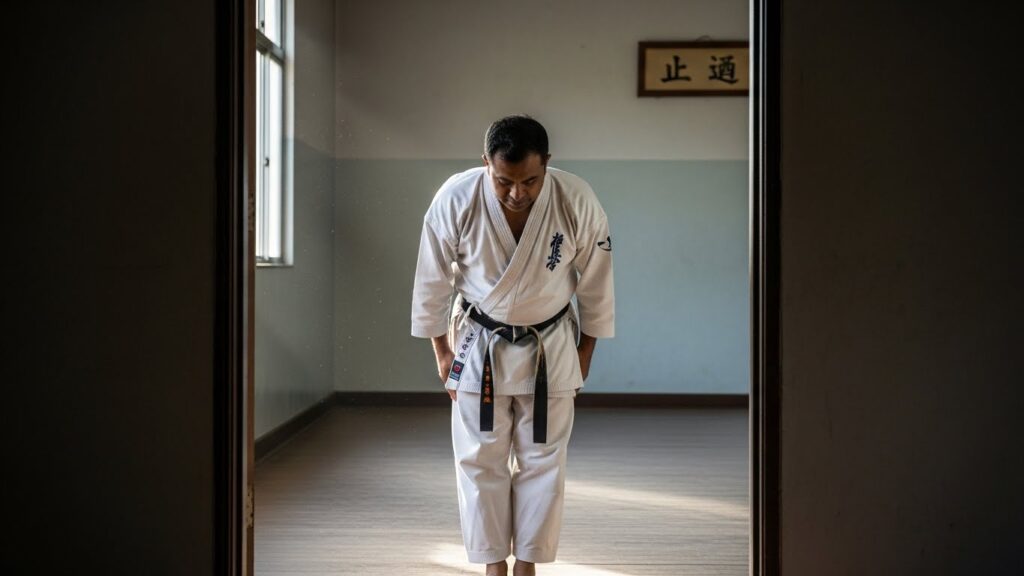
Entering and Exiting the Dojo
Always bow at the entrance when entering or leaving the dojo. This shows respect for the place of learning.
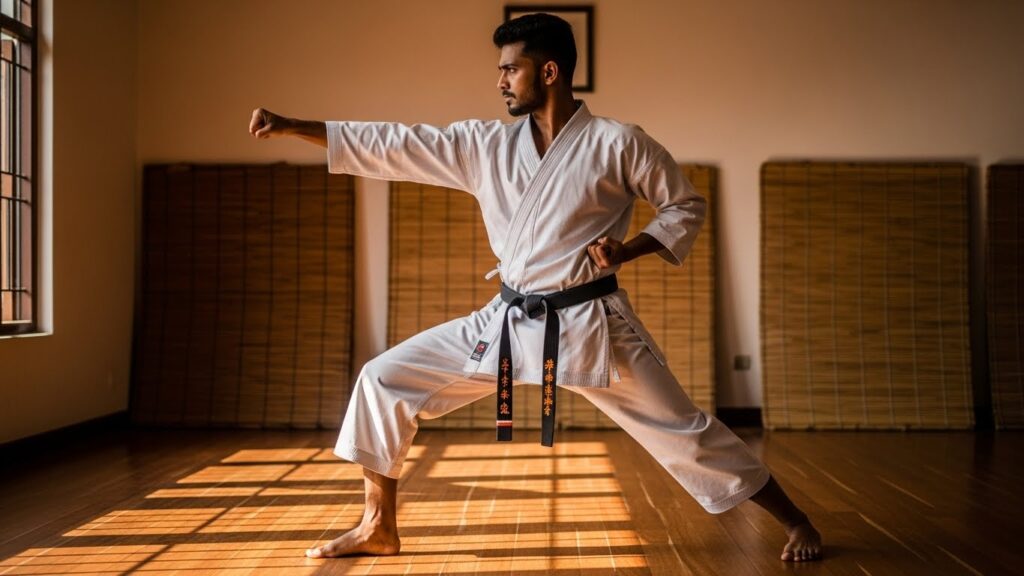
Punctuality
Karate emphasizes discipline and punctuality. If you arrive late, bow at the entrance, kneel quietly, and wait for the instructor’s acknowledgment before joining the class.
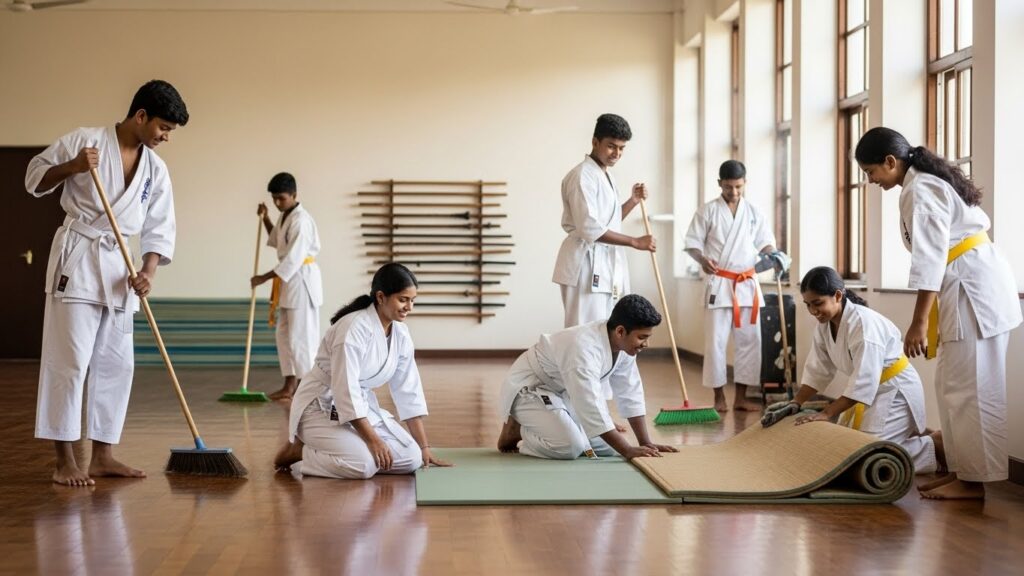
Cleaning the Dojo
All students are expected to participate in cleaning the dojo before class. This practice instills humility and respect for the training space.
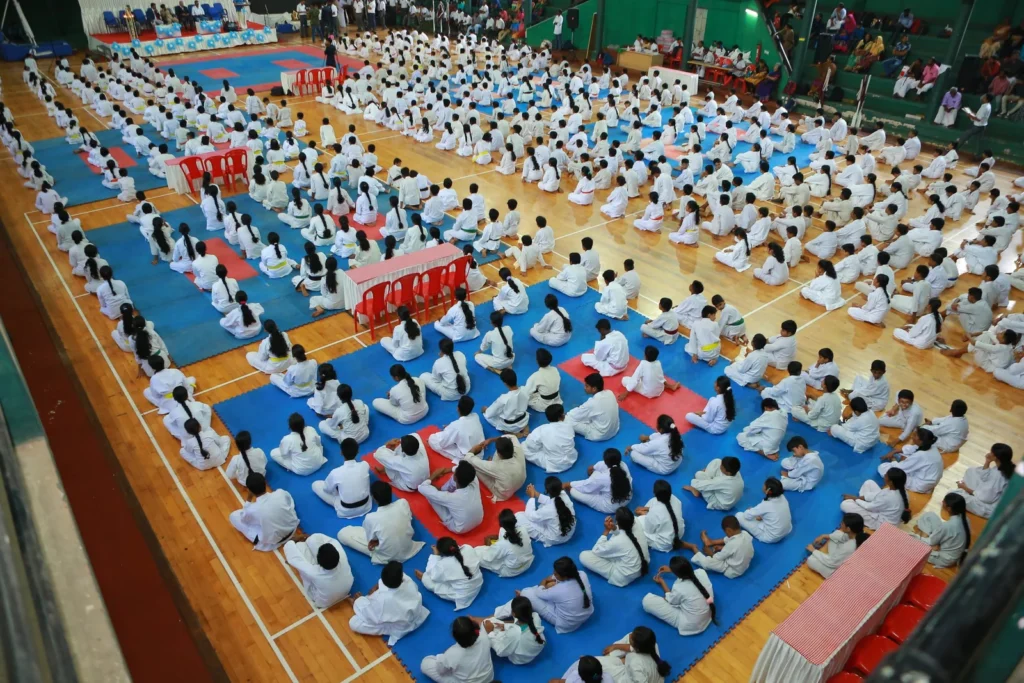
Beginning and Ending the Class
Classes follow a formal routine. Students line up according to rank, follow the instructor’s commands, and bow respectfully at the beginning and end of each session.
Traditional Karate
Traditional Karate focuses on conquering the ego, not defeating another person. It teaches practitioners to face difficult challenges, break arrogance, and uncover their true selves.
True Karate self-defense is the ability to avoid violence, using force only as a last resort when absolutely necessary. It stands firmly for peace, justice, and moral responsibility.
By embracing the philosophy of Traditional Karate, even a restless mind can transform into a calm and focused one. Our dojo is not just a training hall—it is a place of meditation, self-reflection, and personal growth.
Styles of Karate
There are several styles of Karate, each with unique techniques and philosophies. The four major styles are:
- Goju-ryu
- Shotokan-ryu
- Wado-ryu
- Shito-ryu
The Three Pillars of Karate Training
Karate training is built upon three essential components:
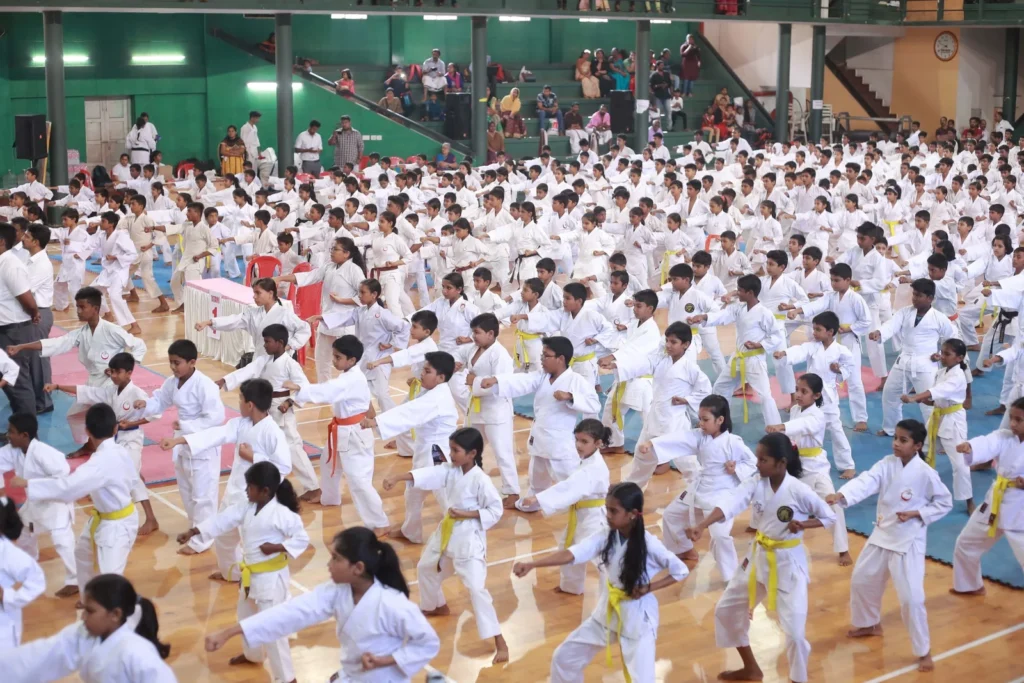
Kata: The Form of Karate
The Japanese word Kata means “form.” Kata consists of predefined movements that help practitioners master techniques with precision and control. Traditionally, Kata was the primary method used by masters to teach Karate.
There are 102 katas recognized by the World Karate Federation, each requiring years of dedicated practice. Kata enhances core strength, balance, reflexes, and mental focus.At our dojo, we place special emphasis on Shotokan Karate katas, which include 26 forms essential for belt advancement. Learning from experienced instructors ensures that the training is both engaging and authentic.
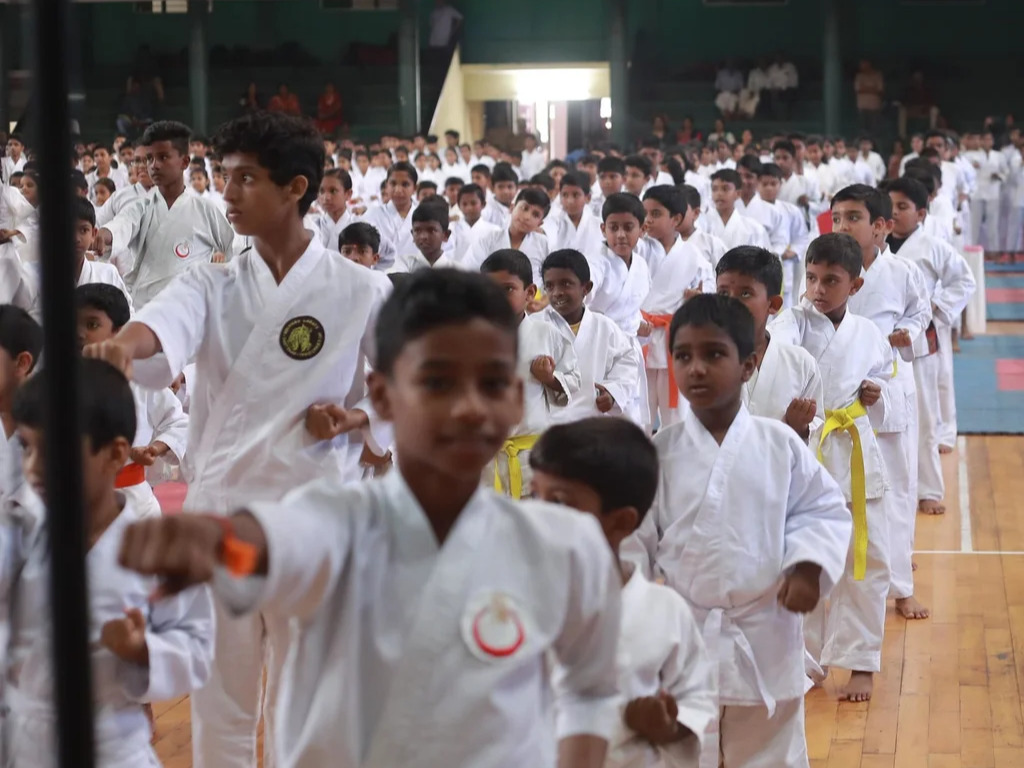
Sports Karate
Sports Karate represents the modern, competitive evolution of traditional Karate. It emphasizes performance, speed, and scoring, and gained global recognition with its inclusion in the 2020 Olympics.While Sports Karate differs from Traditional Karate in its competitive focus, both share the same foundational techniques. Sports Karate is ideal for those who wish to showcase their skills in tournaments and competitive platforms.Our dojo offers specialized training in Sports Karate, blending traditional principles with modern techniques to create well-rounded martial artists.
Kumite: The Practical Application
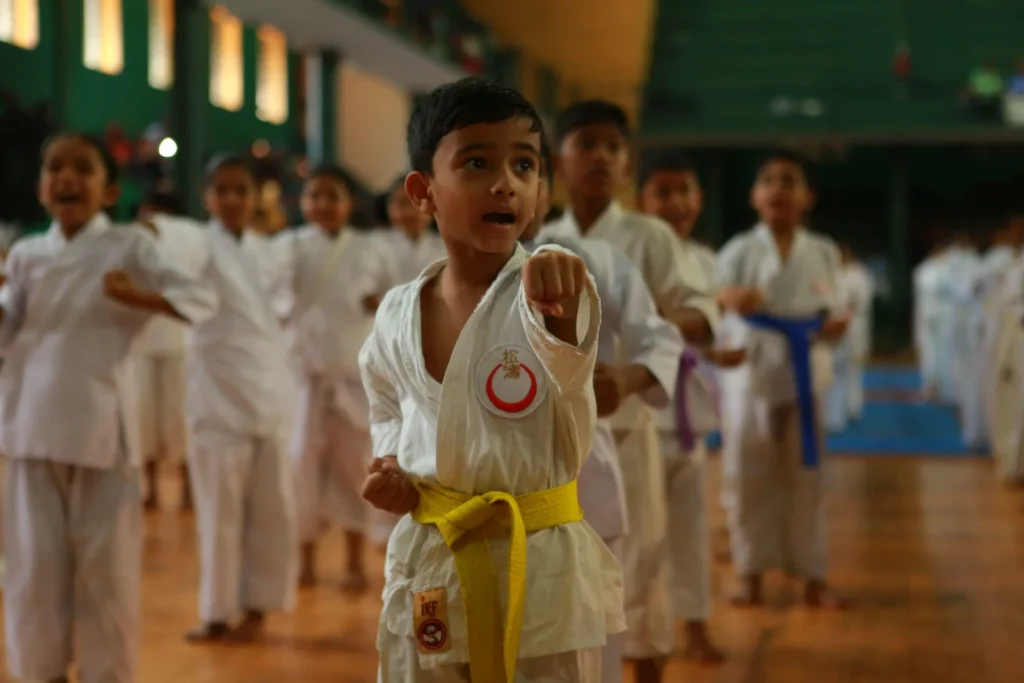
Kumite is the practical side of Karate, where students apply techniques learned in Kata and Kihon with a training partner. It helps develop timing, precision, physical endurance, and mental resilience. Since Kumite involves controlled contact, proper guidance and safety are essential. Under the supervision of experienced instructors, students train in a structured manner while using protective measures to minimize injuries. Kumite competitions are held globally, giving skilled karatekas a platform to demonstrate their discipline and abilities.
