
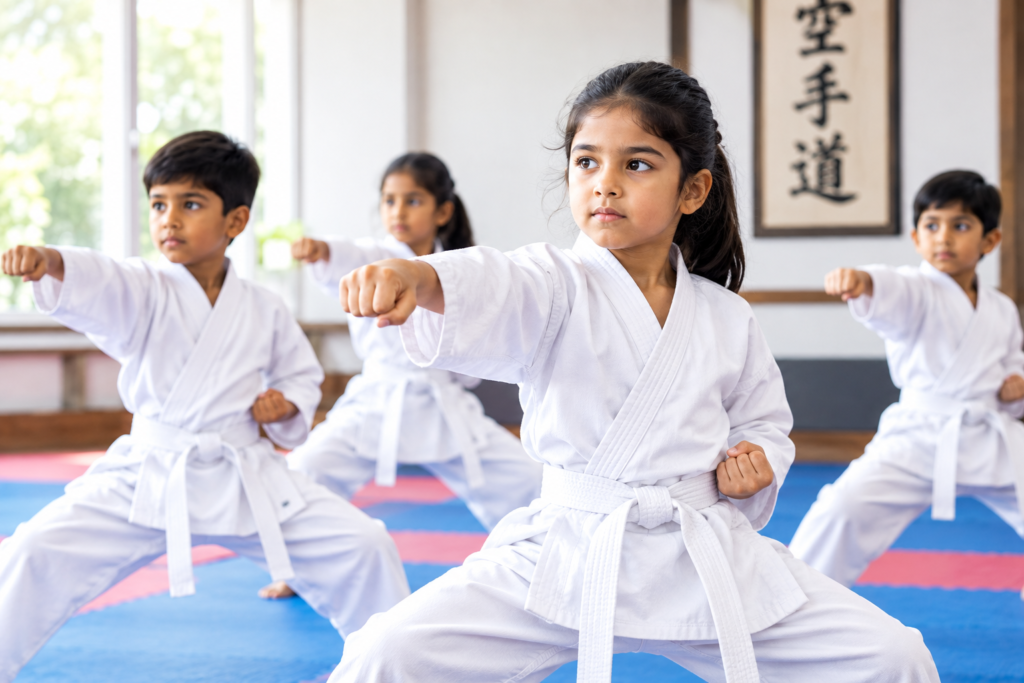
Parents often look for activityis that support more than physical fitness. They want their children to concentrate better, remember what they learn, and become confident learners. Can Karate Improve a Child’s Memory and Learning Ability? Karate may support these skills because training requires children to listen, observe, remember sequences, follow instructions, and repeat movements with accuracy. While karate is not a replacement for classroom learning or targeted educational support, its structured practice can give children regular opportunities to exercise attention, recall, coordination, and problem-solving.
How Can Karate Improve a Child’s Memory and Learning Ability?
Karate lessons involve more than learning punches and kicks. Children are expected to remember techniques, body positions, combinations, commands, and sequences. They must also pay attention to demonstrations and apply what they have seen.
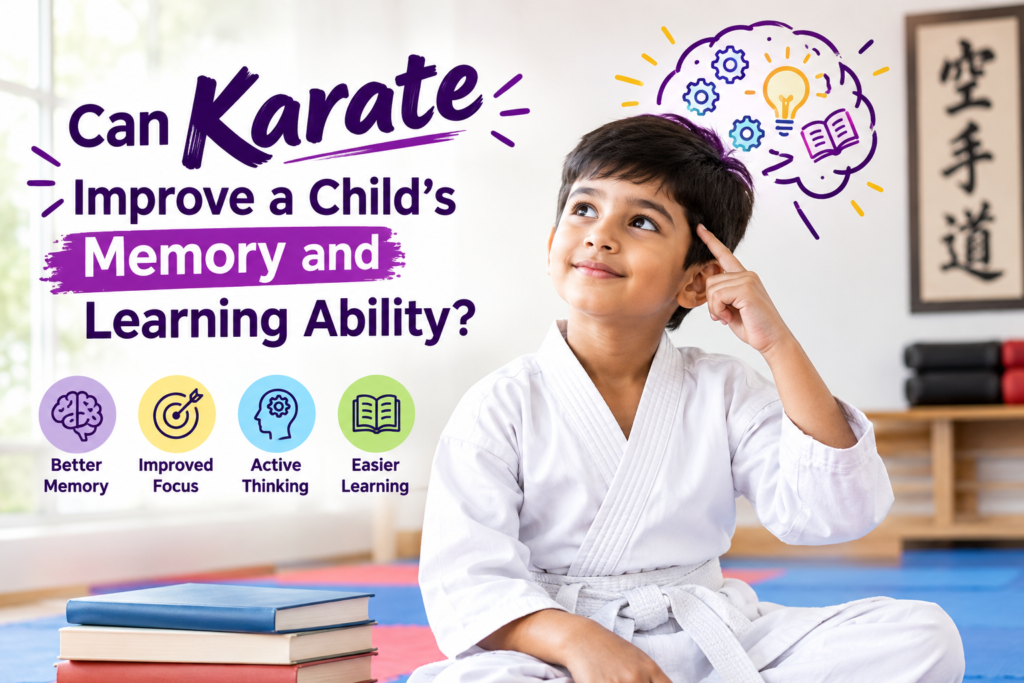
Can Karate Improve a Child’s Memory and Learning Ability? One reason it may help is that learning in karate combines physical movement with mental attention. Instead of simply hearing information, children see a movement, perform it, receive feedback, and repeat it. This active learning process can make practice more engaging.
1. Learning Through Repetition
Repetition is a central part of martial arts training. A child may practise the same stance or technique several times before moving to a more advanced variation.
Can Karate Improve a Child’s Memory and Learning Ability? Repeated practice gives children opportunities to recall information and strengthen their familiarity with it. They gradually remember what comes next without needing constant reminders from the instructor.
The same habit can encourage children to understand that learning takes practice. Whether they are memorising spelling words, practising multiplication, or learning a musical piece, the message is similar: improvement comes through consistent effort.
2. Remembering Sequences and Patterns
As students progress, they may learn combinations or forms containing several movements in a particular order. They need to remember where to move, which technique comes next, and how to maintain the correct posture.
Can Karate Improve a Child’s Memory and Learning Ability? Remembering these sequences gives children a practical reason to use recall and attention together. They are not simply memorising a list; they are using memory while moving their bodies.
This can also make training mentally engaging. A child needs to notice details, recognise patterns, and remember corrections from previous sessions.
How Karate Encourages Better Attention
Memory and learning are closely connected to attention. If a child is not listening or observing carefully, remembering new information becomes harder.
Can Karate Improve a Child’s Memory and Learning Ability? The structured nature of a karate class can encourage children to stay mentally present. Instructors demonstrate techniques and expect students to watch before trying them.
3. Listening Carefully to Instructions
During a class, children may need to respond to verbal commands, demonstrations, and corrections. They have to listen for details such as direction, timing, stance, and technique.
This gives them repeated opportunities to practise active listening. Instead of rushing into an activity, they learn to pause, observe, and respond.
For parents, this can be a useful habit to encourage at home as well. Asking a child to listen to a full instruction before starting a task can reinforce the same behaviour.
4. Staying Focused on One Task
Children can find it difficult to maintain attention for long periods, especially when an activity feels repetitive. Karate can break training into manageable tasks: practising a stance, repeating a technique, learning a combination, or working through a form.
Can Karate Improve a Child’s Memory and Learning Ability? When children focus on one movement at a time and gradually connect movements together, they practise sustained attention in an active environment.
This does not mean every child who learns karate will automatically develop longer attention spans. Children differ, and progress depends on many factors. However, regular structured practice can provide another opportunity to develop concentration.
The Connection Between Movement and Learning
Karate is a physical activity, but learning the movements requires mental processing. Children have to understand instructions, remember them, coordinate their bodies, and adjust their performance based on feedback.
Can Karate Improve a Child’s Memory and Learning Ability? The combination of mental and physical activity makes each lesson an opportunity to practise several skills at once.
5. Improving Coordination Between Mind and Body
A karate technique requires timing and coordination. A student may need to position the feet correctly, rotate the hips, move the arms, maintain balance, and control the movement.
Remembering all these elements can challenge a child to process information while performing an action. With practice, movements may become more familiar and controlled.
This mind-body connection can make learning more interactive than simply sitting and receiving information.
6. Learning From Mistakes
Making mistakes is a normal part of learning karate. A child may perform a movement incorrectly, forget a step, or lose balance. The instructor can then provide a correction and allow the child to try again.
Can Karate Improve a Child’s Memory and Learning Ability? The important lesson is not that mistakes disappear, but that children learn to notice errors, remember corrections, and apply them during the next attempt.
This approach can encourage a healthy attitude toward learning. Instead of viewing a mistake as the end of the process, children can learn to treat it as information that helps them improve.
How Parents Can Support Learning Through Karate
Parents can make the learning experience more valuable by connecting training habits with everyday routines. They do not need to turn every karate lesson into an academic exercise.
Ask your child what technique they learned and whether they remember the sequence. Encourage them to explain what they practised in their own words. Celebrate effort and improvement rather than focusing only on belt advancement.
Can Karate Improve a Child’s Memory and Learning Ability? Parents can support the process by giving children time to recall what they learned instead of immediately providing the answer.
For example, after class, ask, “What was the first movement in the combination?” or“What correction did your instructor give you today?” Simple questions encourage children to retrieve information from memory.
Karate and Academic Learning
Karate should not be presented as a guaranteed way to improve grades or academic performance. School achievement depends on many factors, including teaching quality, study habits, sleep, nutrition, motivation, and individual learning needs.
However, some of the habits practised in karate such as listening, remembering sequences, staying with a task, and learning from feedback are also useful during study.
Can Karate Improve a Child’s Memory and Learning Ability? It is more accurate to say that karate can provide practice in skills that support learning rather than claiming that it directly increases academic ability in every child.
For children who enjoy active learning, this can be a valuable addition to their routine.
Choosing the Right Karate Environment
The training environment matters. A good programme should provide age-appropriate instruction, clear explanations, safe practice, and positive feedback.
Parents looking for international karate training should also consider the instructor’s experience, teaching approach, class structure, safety standards, and how well the programme suits their child.
Online searches may sometimes contain phrases such as karate tarining, but spelling variations are less important than finding a credible academy with qualified instructors and a supportive environment.
Can Karate Improve a Child’s Memory and Learning Ability? The quality of teaching and the child’s willingness to participate are important parts of the overall experience.
Why a Consistent Routine Matters
Children usually need time to develop new skills. Attending one class and expecting immediate changes in memory or learning is unrealistic.
Regular practice gives children repeated opportunitis to remember techniques, apply corrections, and build familiarity. Consistency also helps them understand that progress is gradual.
Parents can encourage a manageable routine rather than putting pressure on children to achieve results immediately. The goal is to make learning sustainable and enjoyable.
Nochikan karate can provide children with a structured environment where physical practice and mental attention work together. As with any activity, the experience will vary from child to child, so parents should focus on finding a programme that matches their child’s age, interests, and needs.
Conclusion
Can Karate Improve a Child’s Memory and Learning Ability? Karate can provide regular opportunities for children to practise memory, attention, listening, sequencing, coordination, and learning from feedback. These skills are valuable both inside and outside the dojo.
Karate should not be treated as a substitute for academic support, but it can be a meaningful part of a balanced routine. With consistent practice, patient instruction, and encouragement from parents, children can develop habits that make the learning process more active and purposeful.
