
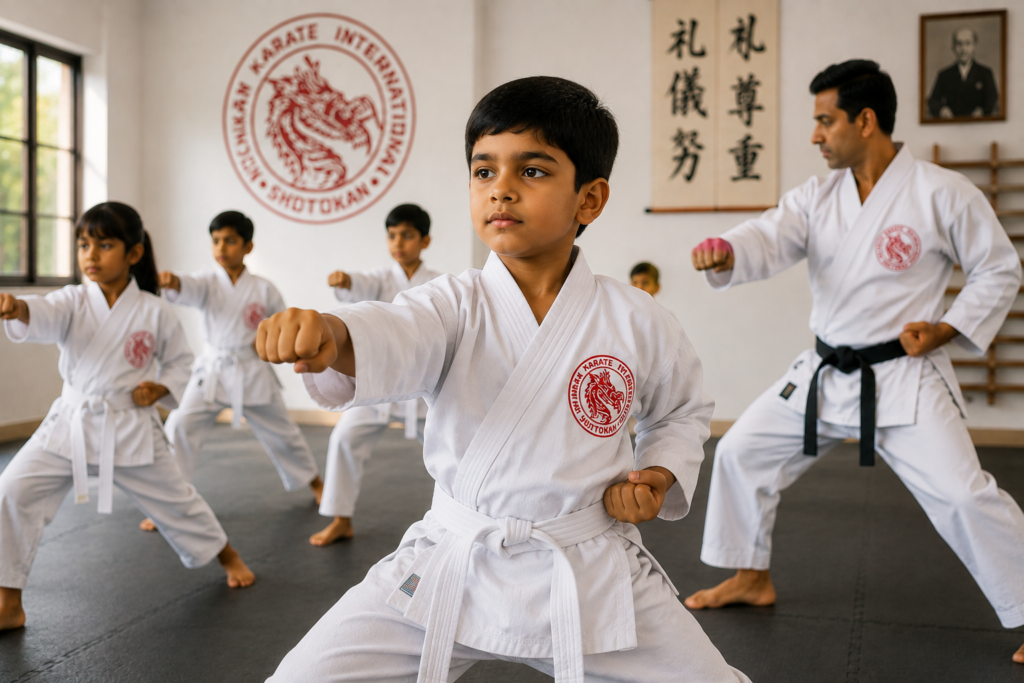
Children naturally have lots of energy, emotions, and curiosity. They may become frustrated when things do not happen quickly, lose patience while waiting for their turn, or react emotionally when they make a mistake. For parents, learning how to help your child become more patient and calm can be an important part of supporting their emotional and personal development.
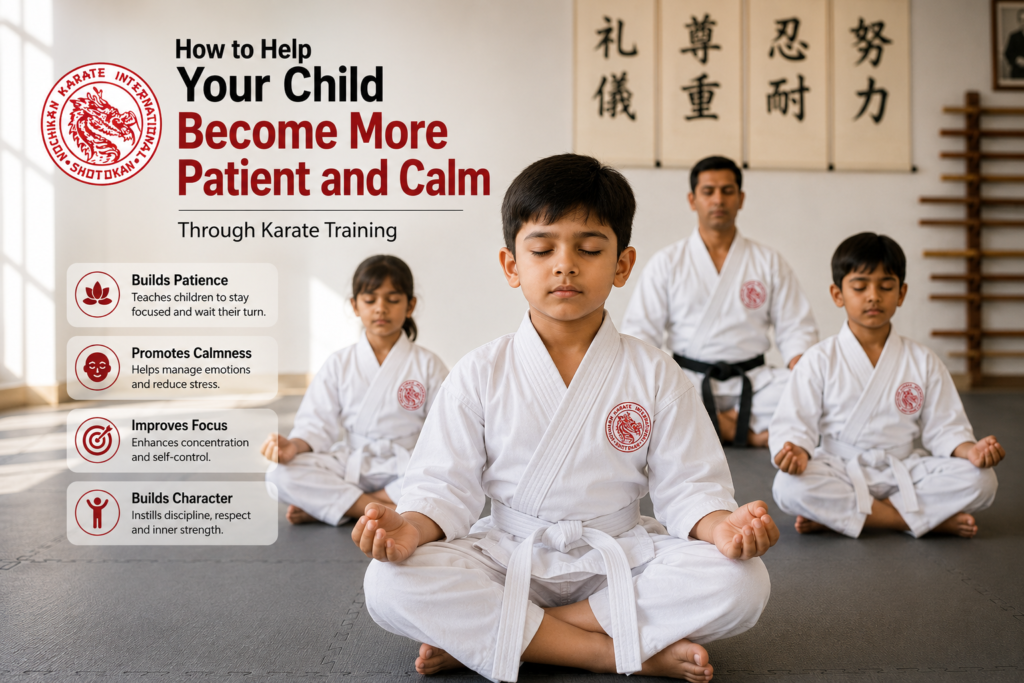
Patience and calmness are not skills that develop instantly. Children need opportunities to practise waiting, listening, controlling their reactions, and dealing with challenges. Activities such as martial arts can provide a structured environment where children gradually develop these qualities.
At Nochikan Karate, training is not only about learning physical techniques. Karate can also encourage discipline, concentration, confidence, respect, patience, and self-control. Here are practical ways parents can support these qualities at home and through regular Karate training.
Why Is Patience Important for Children?
Patience helps children deal with situations that require waiting, effort, and persistence. A patient child is more likely to continue trying when something is difficult instead of giving up immediately.
If you are wondering how to help your child become more patient and calm, start by understanding that patience is a learned behaviour.
Patience can help children:
- Wait for their turn
- Listen without interrupting
- Complete difficult tasks
- Handle mistakes
- Control impulsive reactions
- Stay focused for longer
- Accept challenges
- Communicate more respectfully
These qualities can be useful at home, at school, during sports, and later in life.
How to Help Your Child Become More Patient and Calm Through Daily Practice
Parents often ask how to help your child become more patient and calm when their child becomes easily frustrated. One of the best approaches is to introduce small, consistent opportunities to practise patience.
1. Be a Calm Role Model
Children learn by observing adults. If parents respond to stressful situations with shouting or frustration, children may copy the same behaviour.
Instead, demonstrate calm responses in everyday situations.
For example, if you are waiting for something, you could say:
“Let’s be patient for a few more minutes.” Let’s stay calm.”
This simple example shows your child that waiting does not have to result in frustration.
For parents exploring how to help your child become more patient and calm, modelling calm behaviour is one of the simplest places to begin.
2. Teach Your Child to Pause Before Reacting
Children may respond immediately when they feel angry or frustrated. Teaching them to pause gives them time to think.
A simple technique is:
Stop → Breathe → Think → Respond
When your child becomes upset, encourage them to take a slow breath before speaking or acting.
This can gradually teach children how to help your child become more patient and calm by creating a small gap between an emotion and a reaction.
3. Introduce Small Waiting Periods
Children do not need to learn patience through long and difficult situations. Start with small examples.
If your child asks for something while you are busy, you can calmly say:
“Please wait for a few minutes.“I’ll help you as soon as I’m done with this.”
Gradually increasing these waiting periods can help children become more comfortable with delayed gratification.
Parents who want to understand how to help your child become more patient and calm should remember that small daily experiences can create lasting habits.
4. Encourage Karate Training
Karate can provide children with structured opportunities to develop patience and self-control.
During training, children learn that techniques take time to master. They may need to repeat the same movement several times before performing it correctly.
They also learn to listen to instructions, wait for their turn, follow rules, and practise consistently.
This makes Karate a useful activity for parents considering how to help your child become more patient and calm.
At Nochikan Karate, children can learn that progress comes through regular practice rather than instant results.
5. Teach Children That Progress Takes Time
Children sometimes expect to become good at something immediately. When they struggle, they may feel frustrated.
Explain that learning is a process.
You can say:
“You may not be able to do it today, but you can improve with practice.”
This approach helps children develop persistence and teaches them how to help your child become more patient and calm when facing difficulties.
Karate training naturally reinforces this idea because students progress through practice, repetition, discipline, and gradual improvement.
6. Praise Effort and Self-Control
Parents should recognise more than just results.
If your child waits patiently, controls an angry reaction, listens carefully, or keeps practising after making a mistake, acknowledge that behaviour.
You might say:
- “I liked how calmly you handled that.”
- “You waited for your turn very patiently.”
- “You kept trying even though it was difficult.”
- “You controlled your frustration really well.”
Specific praise helps children understand which behaviours they should repeat.
This is another useful strategy for how to help your child become more patient and calm without putting unnecessary pressure on them.
7. Avoid Solving Every Problem Immediately
Parents naturally want to help their children. However, solving every problem immediately can prevent children from learning how to handle frustration.
If your child is struggling with something, give them a little time to think before stepping in.
Instead of immediately giving the answer, ask:
“What could you try next?”
This encourages problem-solving and persistence.
Karate training can reinforce the same principle. Students learn through practice and correction rather than expecting the instructor to do everything for them.
Understanding how to help your child become more patient and calm means giving them opportunities to experience challenges safely.
8. Teach Children to Manage Strong Emotions
Being calm does not mean never feeling angry, disappointed, or frustrated.
Children need to understand that emotions are normal. What matters is learning how to respond to them appropriately.
Help your child identify emotions such as:
- Anger
- Frustration
- Disappointment
- Nervousness
- Excitement
- Worry
When your child is upset, acknowledge the emotion while setting appropriate boundaries.Forexample:
“I understand that you are angry, but we cannot hit or shout at others.”
This teaches emotional awareness and self-control.
If you are researching how to help your child become more patient and calm, emotional awareness should be an important part of the process.
9. Create a Consistent Routine
Children often behave more calmly when they know what to expect.
A predictable routine for school, homework, play, meals, Karate practice, and bedtime can make daily life more organised.
Consistency also helps children understand that responsibilities cannot always be avoided simply because they do not feel like doing them.
A structured routine can therefore support parents learning how to help your child become more patient and calm.
10. Teach Respect and Listening
Patience and calmness are closely connected with listening.
During Karate training, students are expected to listen to instructors, follow directions, respect training partners, and wait for instructions before beginning an activity.
These habits can also be encouraged at home.
Ask your child to look at the person speaking, listen carefully, and wait until the other person finishes before responding.
Such habits can help children develop better communication and self-control.
How Karate Supports Patience and Self-Control
Karate is more than physical exercise. A well-structured Karate training programme can give children opportunities to practise discipline, focus, respect, confidence, and emotional control.
During training, children may learn to:
- Follow instructions
- Wait for their turn
- Practise techniques repeatedly
- Respect instructors and classmates
- Control physical movements
- Handle mistakes
- Work towards gradual improvement
- Stay focused during training
These experiences can help parents understand how to help your child become more patient and calm through meaningful activities rather than simply telling children to “be patient.”
Karate Teaches the Value of Repetition
A child may not master a Karate technique after trying it once. They need to repeat it, receive guidance, correct mistakes, and practise again.
This process teaches an important life lesson:
Improvement takes time.
Children gradually learn that effort and consistency are often more important than immediate success.
For parents asking how to help your child become more patient and calm, this is one of the valuable lessons Karate traning can provide.
What Parents Should Avoid
When helping children develop patience, avoid expecting instant changes.
Do not compare your child with another child who appears calmer. Every child develops emotional control at a different pace.
Avoid saying things such as:
“Why can’t you behave like him?”
Instead, focus on your child’s own progress.
Also avoid shouting repeatedly when your child becomes impatient. A calm and consistent response is usually more helpful.
If you are trying to learn how to help your child become more patient and calm, remember that parents also need patience during the process.
Give Your Child Time to Grow
Learning patience and calmness is a gradual process. There may be days when your child handles frustration beautifully and other days when they struggle again.
That does not mean they are moving backwards.
Children need repeated opportunities to practise emotional control.
With supportive parenting, consistent routines, positive reinforcement, and structured activities such as Karate, children can gradually become better at handling frustration and responding thoughtfully.
Parents searching for how to help your child become more patient and calm should focus on progress rather than perfection.
Final Thoughts
Knowing how to help your child become more patient and calm starts with small everyday habits. Encourage your child to pause, breathe, listen, wait, practise, and try again.
Karate can be a valuable part of this journey because it gives children a structured environment where patience, discipline, respect, focus, and self-control are practised regularly.
At Nochikan Karate, children can learn that strength is not only about physical ability. True strength also involves controlling emotions, respecting others, staying focused, and continuing to work through challenges.
If you are looking for practical ways to understand how to help your child become more patient and calm, consider combining positive parenting with activities that encourage discipline and consistent practice.
With time, encouragement, and the right environment, children can develop greater patience, stronger self-control, and a calmer approach to everyday challenges.
