
Choosing an extracurricular activity for your child can be challenging, especially when you want something that supports both physical and mental development. Martial arts offer opportunities to develop fitness, coordination, confidence, and self-control. However, parents often find themselves comparing different styles before enrolling their children. Understanding Karate vs Taekwondo can help you identify which discipline better matches your child’s interests, needs, and learning style. Both martial arts have distinct traditions and training methods, and neither is automatically the right choice for every child. By understanding their differences, you can make a more informed decision about your child’s martial arts journey.
What Is the Difference Between Karate and Taekwondo?
Karate and Taekwondo are martial arts that teach students physical techniques, respect, discipline, and controlled movement. Although they share some principles, their techniques and training emphases differ.
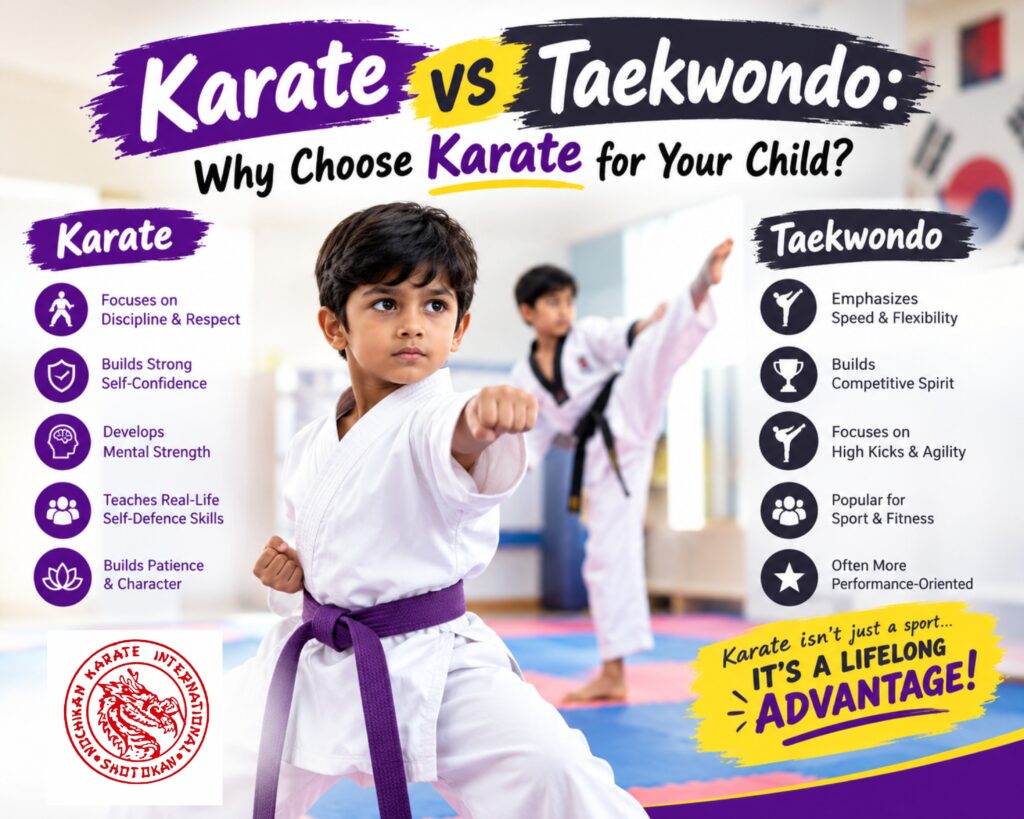
Karate developed primarily in Okinawa, Japan, and includes punches, blocks, kicks, strikes, stances, and structured forms called kata. Students learn how to coordinate different movements, maintain balance, and respond to training situations with control.
Taekwondo originated in Korea and is particularly known for its dynamic kicking techniques. Students practise different kicks, footwork, blocks, punches, and formal patterns called poomsae. Depending on the school and programme, training may place considerable emphasis on flexibility, kicking accuracy, speed, and sport competition.
When parents compare Karate vs Taekwondo, they should remember that each martial art includes more than its most recognisable techniques. Both require regular practice, patience, and commitment. The actual experience also depends on the instructor, the curriculum, and the way classes are organised for children.
Karate vs Taekwondo for Children: Understanding the Training Style
The training environment is an important consideration when selecting a martial art for a child. Children learn at different speeds, and their comfort with new activities can vary.
What Do Children Learn in Karate?
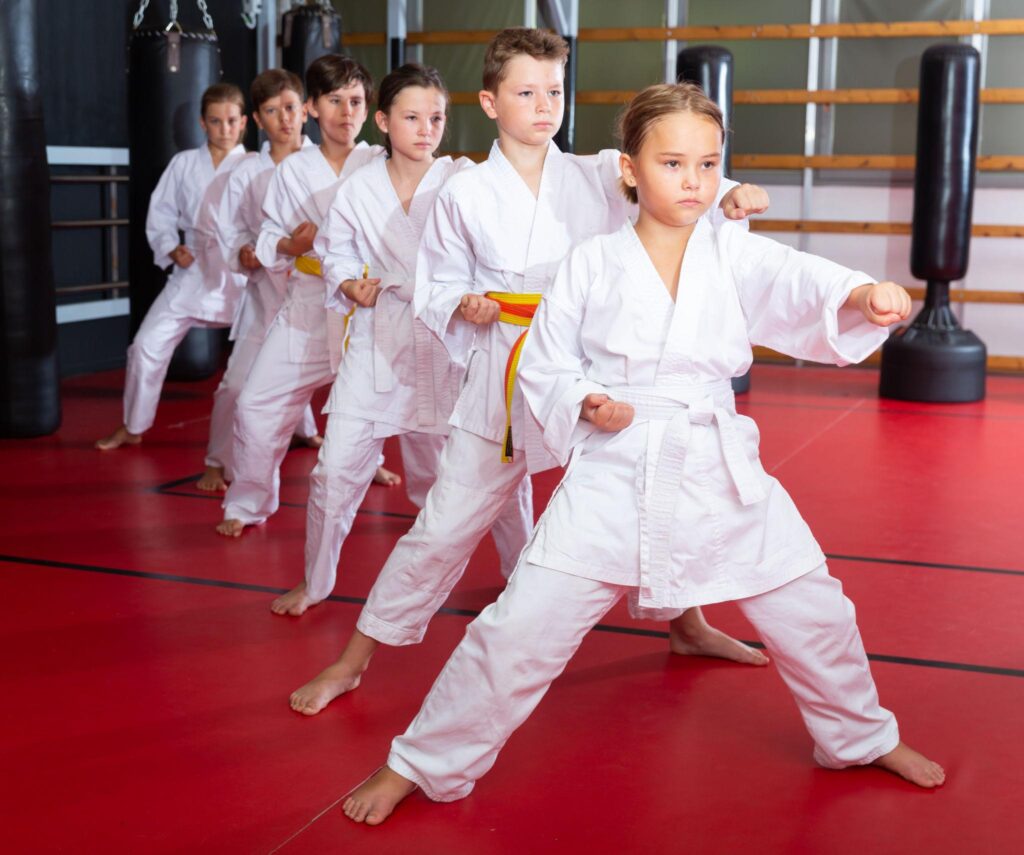
Karate classes generally introduce students to basic stances, punches, blocks, kicks, and coordinated movement. Beginners practise these techniques repeatedly before gradually combining them into more complex sequences.
Students may also learn kata, which are organised movements performed in a particular sequence. Practising kata encourages children to remember instructions, pay attention to details, and coordinate their movements.
Partner exercises may be introduced as students progress. These activities teach children to maintain control, follow safety instructions, respect training partners, and understand appropriate distance.
What Do Children Learn in Taekwondo?
Taekwondo classes commonly include kicking drills, footwork, balance exercises, flexibility training, hand techniques, and patterns. Some programmes also introduce controlled sparring as students develop their skills and follow the school’s safety requirements.
Children who enjoy kicking techniques, fast movements, and flexibility challenges may find this training style engaging. The emphasis varies depending on whether the school focuses on traditional martial arts, recreational classes, or sport competition.
In a Karate vs Taekwondo comparison, the main difference is not that one teaches discipline while the other does not. Both can teach discipline and respect. The practical difference lies in their technical emphasis and the way each school structures its lessons.
Why Do Some Parents Choose Karate for Their Children?
Karate can be a suitable option for children who want to learn a structured martial art while developing a range of physical and personal skills. Here are some reasons parents may consider it.
1. Learning Self-Control and Discipline
Karate lessons involve following instructions, practising techniques correctly, waiting for turns, and respecting instructors and classmates. Children learn that improvement requires consistent effort rather than immediate results.
These routines can help children practise self-control in a structured environment. Over time, they may become more familiar with listening carefully, completing assigned exercises, and following agreed rules. However, these habits develop gradually and are also influenced by family life, school experiences, and the child’s individual personality.
2. Developing Focus and Concentration
Karate requires students to pay attention to instructions and remember the order of movements. During practice, children need to coordinate their hands, feet, posture, and breathing.
Repeating a technique gives them opportunities to notice mistakes and make corrections. These activities can encourage focused attention during training, although improvements in classroom concentration are not guaranteed for every child.
3. Improving Coordination and Balance
Karate combines different movements, including stepping, turning, blocking, and striking. Beginners gradually learn to coordinate their bodies while maintaining stable stances.
Regular, age-appropriate practice can support balance, movement control, and general physical fitness. Children may also become more aware of their posture and how their bodies move through space.
4. Building Confidence Through Progress
Children do not need to be naturally athletic to begin learning karate. A well-structured class allows beginners to practise basic skills before moving to more challenging techniques.
Achieving small milestones can help children recognise their progress. Gradually learning a new movement, remembering a sequence, or completing a grading can provide a sense of accomplishment.
Parents should focus on effort and personal improvement rather than comparing their child with classmates. This helps make progress meaningful, even when development takes time.
Can Karate Help Children Learn Self-Defence?
Self-defence is another reason parents explore martial arts. Karate introduces students to blocking, movement, distance, awareness, and controlled responses to training situations.
However, learning martial arts does not make a child invulnerable or guarantee that they can handle every dangerous situation. Effective child-safety education should also include recognising unsafe behaviour, maintaining boundaries, seeking help from trusted adults, and moving away from danger whenever possible.
A responsible instructor explains the difference between training exercises and real-life situations. Children should understand that techniques are practised under supervision and must never be used to bully, threaten, or deliberately hurt others.
Taekwondo also teaches martial arts techniques that can form part of a self-defence curriculum. Therefore, parents should ask what the school actually teaches rather than assuming that a particular style alone guarantees practical self-defence skills.
Karate vs Taekwondo: Which Skills Matter Most for Your Child?
The right choice depends on what your child enjoys and what you hope they will gain from training.
A practical Karate vs Taekwondocomparison should consider your child’s interests, the class environment, the instructor’s teaching approach, and the programme’s suitability for their age.
Consider these factors before making a decision:
Interest: Does your child enjoy learning punches, blocks, and structured sequences, or are they especially interested in dynamic kicking techniques?
- Teaching style: Does the instructor explain movements clearly and encourage children to learn at their own pace?
- Class atmosphere: Are students treated respectfully, and is the environment supportive rather than intimidating?
- Safety: Are exercises age-appropriate, with suitable supervision and clear rules for partner practice?
- Practical convenience: Is the class schedule manageable alongside schoolwork, rest, and other activities?
Progression: Does the programme provide clear learning goals and constructive feedback?
Both martial arts can support physical activity and personal development. A child’s experience will depend significantly on how the programme is delivered and whether they enjoy attending consistently.
What Should Parents Look for in a Karate Academy?
Once you decide to explore karate, take time to understand the academy’s teaching methods. A well-organised programme should teach techniques progressively, explain safety expectations, and provide an environment where children can ask questions without feeling embarrassed.
Ask whether the instructors have relevant qualifications and experience working with children. Observe how they correct mistakes, manage different ability levels, and respond when a student feels nervous or struggles with an exercise.
Parents can also enquire about class size, grading requirements, fees, attendance expectations, and opportunities to discuss a child’s progress. If the academy offers international karate training opportunities or competition pathways, ask what those involve and whether participation is optional.
Before enrolling, consider attending a trial class if available. Observe whether the students receive individual attention and whether the training pace is appropriate for beginners.
When researching options such as Nochikan karate, parents should evaluate the actual programme, instructor experience, class arrangements, and suitability for their child instead of relying only on promotional claims.
Consistent attendance is important, but children also need adequate rest and time for school, play, and family life. A sustainable routine is more helpful than placing excessive pressure on a young learner.
Is Karate Suitable for Beginners?
Yes, many karate programmes accept beginners with little or no previous martial arts experience. Children typically start with fundamental movements and learn more advanced techniques as their skills develop.
Parents should not worry if their child initially struggles to remember instructions or coordinate movements. Learning a new physical skill takes practice, and every child progresses differently.
Look for an instructor who explains techniques clearly, demonstrates movements, and provides constructive feedback. If your child feels nervous during the first few sessions, give them time to become familiar with the class, while also listening to their concerns.
It is also worth discussing any physical limitations or individual support needs with the instructor before training begins. The class should be adapted appropriately where possible.
Questions to Ask Before Enrolling Your Child
Before choosing a martial arts class, ask the academy a few practical questions:
- What will beginners learn during their first few months?
- How does the instructor maintain safety during partner exercises?
- How are progress and grading decisions explained?
- Are trial classes available?
- How does the academy support children who need extra practice?
- What are the schedule, fees, and attendance expectations?
If you are researching karate tarining options for your child, remember to assess the quality and suitability of the individual programme. A convenient location and attractive facilities may be helpful, but the teaching approach and your child’s comfort in the class matter too.
Conclusion
Ultimately, Karate vs Taekwondo is not a choice between a good martial art and a bad one. Both offer structured opportunities for children to learn physical skills, practise discipline, and develop confidence through consistent training. Karate may suit children who enjoy learning punches, blocks, stances, and kata, while Taekwondo may appeal to those particularly interested in dynamic kicks and flexibility. The most suitable option is the one that matches your child’s interests and provides safe, supportive instruction. Visit a class, speak with the instructor, and consider a trial session before enrolling. With encouragement and regular practice, your child can enjoy learning new skills and developing at their own pace.
