
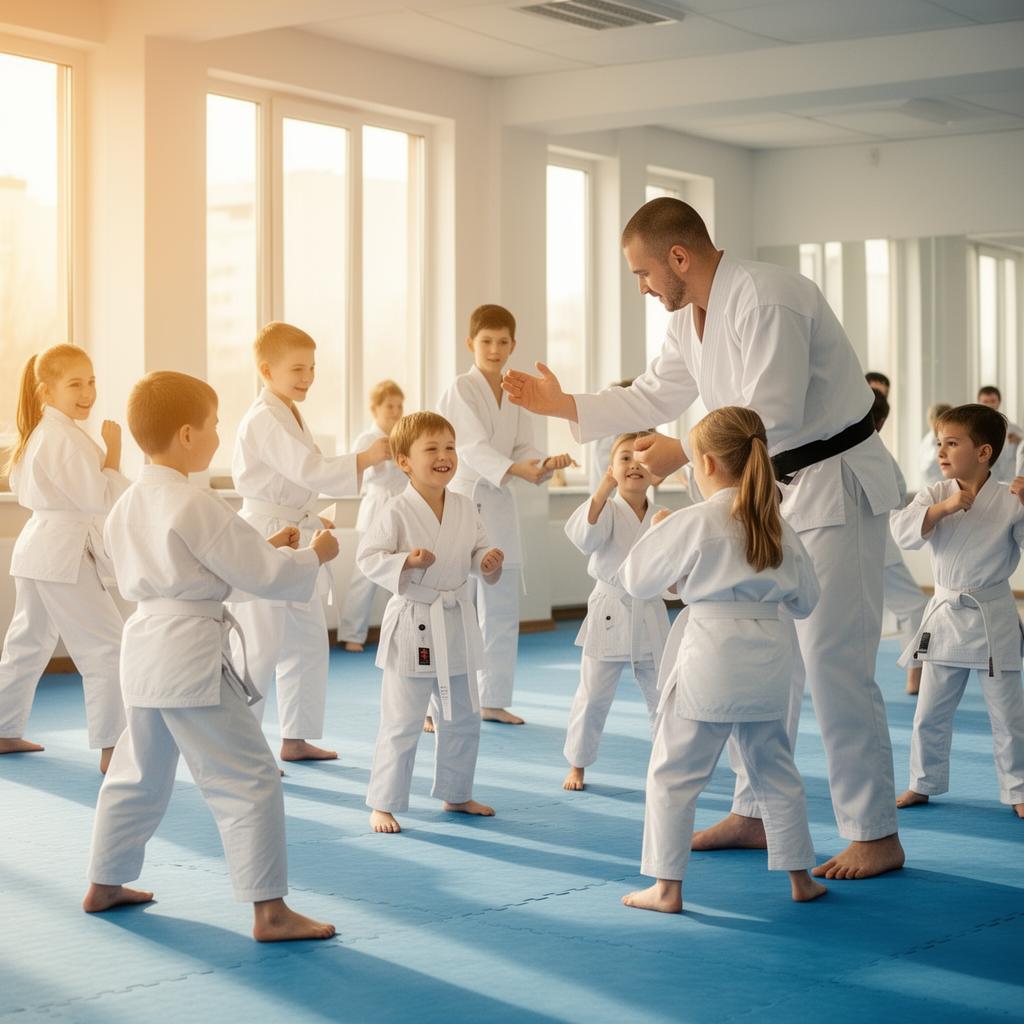
Why Does My Child Avoid Physical Activities? Many parents ask this when their child prefers screens, books, drawing, or indoor games instead of running, playing, or taking part in sports. While some children naturally prefer quieter activities, avoiding movement can sometimes be linked to low confidence, fear of failure, social concerns, or simply not finding an activity they enjoy.
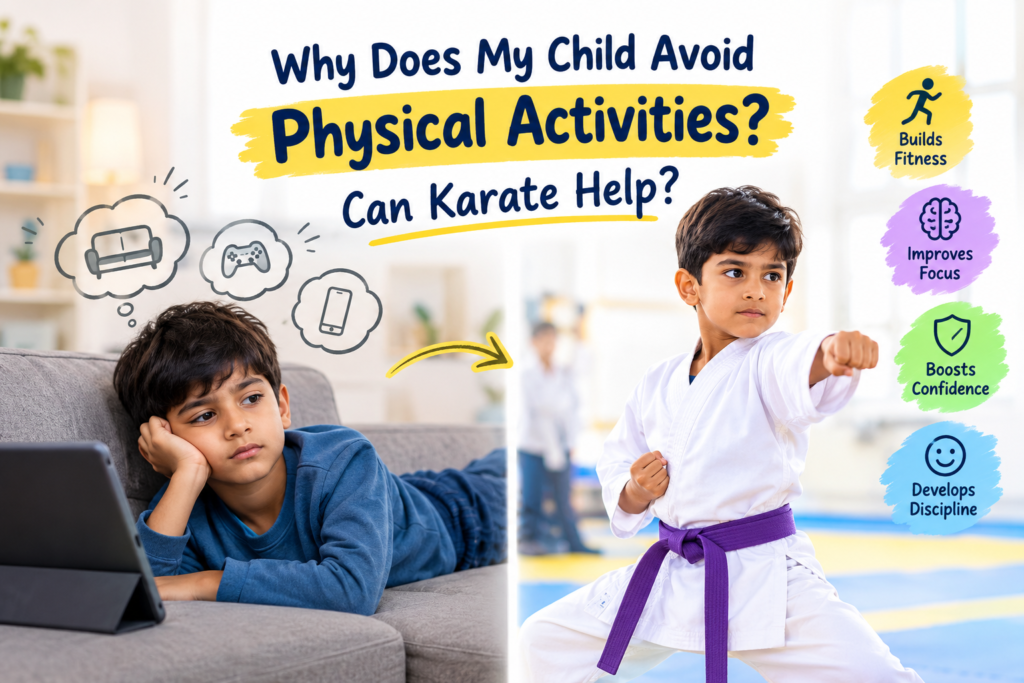
Physical activity does not have to become a daily battle between parents and children. When children discover something enjoyable and supportive, they may gradually become more comfortable with movement. Karate can be one such option because it combines physical exercise with concentration, discipline, coordination, and goal-based learning.
Before choosing an activity, however, parents should understand what is making their child reluctant. The right approach is usually encouragement rather than pressure.
Why Does My Child Avoid Physical Activities? Common Reasons
There is no single explanation for every child’s behavior. Children have different personalities, interests, physical abilities, and previous experiences.
Some children avoid sports because they believe they are not good at them. They may have difficulty catching a ball, running quickly, balancing, or keeping up with classmates. A few negative experiences can make them hesitant to participate again.
Others simply do not enjoy traditional sports. A child who dislikes football or running may still enjoy swimming, dancing, cycling, martial arts, or another activity.
Parents should therefore look beyond the activity itself and consider how the child feels when participating.
Fear of Making Mistakes
Some children worry about making mistakes in front of others. They may feel embarrassed if they cannot perform an exercise correctly or if another child appears more skilled.
This fear can cause avoidance.
A supportive environment can make a major difference. When instructors explain that mistakes are a normal part of learning, children may feel safer trying something new.
Low Confidence
Confidence can strongly influence participation. A child who does not believe they are physically capable may avoid activities where their abilities are visible.
Small achievements can gradually change this mindset. Successfully learning a movement, improving balance, or completing a challenging exercise can give a child a sense of accomplishment.
Too Much Screen Time
Another possible reason parents ask Why Does My Child Avoid Physical Activities? is the amount of time spent on screens.
Television, video games, smartphones, and tablets provide instant entertainment without requiring much physical effort. After a long school day, many children naturally choose these activities.
Parents do not necessarily need to eliminate screens completely. Creating a balanced routine can be more realistic. Setting aside regular time for outdoor play, walking, sports, or martial arts can help movement become part of everyday life.
How Can Karate Help Children Become More Active?
For parents wondering Why Does My Child Avoid Physical Activities?, exploring different types of exercise can be more useful than repeatedly encouraging the same sport.
Karate provides a structured form of movement. Children may practice stretching, stances, footwork, punches, kicks, balance exercises, and combinations. These activities keep the body moving while also requiring attention and concentration.
This can be particularly helpful for children who become bored with repetitive exercise.
Instead of simply being told to exercise, children have something specific to learn. They can work on a technique, remember a sequence, improve their coordination, and gradually progress through their training.
That sense of purpose can make physical activity feel more meaningful.
Why Does My Child Avoid Physical Activities? Confidence Could Be the Key
Sometimes the real obstacle is not a child’s physical ability but their confidence.
A child may enter a new class feeling nervous. During the first few sessions, they may struggle with movements or feel uncomfortable around unfamiliar children. With patient guidance and regular practice, however, they can begin to notice improvement.
That progress can change how they see themselves.
Karate offers many opportunities for gradual achievement. Children are not expected to master everything immediately. They can learn one movement, then another, and eventually combine them.
Small Goals Can Motivate Children
Children often respond positively to achievable goals.
Instead of saying, “You need to exercise more,” parents can set simple targets such as attending two classes each week, practicing a basic movement, or learning a new technique.
When children achieve these small goals, they experience success.
Over time, they may become more willing to challenge themselves because physical activity is associated with progress rather than pressure.
Physical Activity Can Also Be Mental Training
Karate is not only about physical movement. Children need to listen carefully, follow instructions, remember sequences, maintain posture, and coordinate different parts of the body.
This combination can make classes more engaging for children who enjoy learning.
It can also help parents introduce movement in a way that does not feel like traditional exercise.
How Parents Can Encourage a Reluctant Child
If you keep asking Why Does My Child Avoid Physical Activities?, try talking to your child instead of immediately assuming they are lazy or uninterested.
Ask what they enjoy. Find out whether they dislike a particular sport, feel uncomfortable around other children, or are afraid of making mistakes.
Giving children limited choices can also help. Parents might offer two or three suitable activities and allow the child to choose one.
This gives children a sense of involvement in the decision.
Parents should also praise effort rather than comparing performance.
Instead of saying, “You were the best today,” try saying, “I noticed how carefully you practiced.”
This teaches children that improvement matters more than being the best.
Choosing the Right Karate Class
When considering karate, parents should look for a programme that places importance on safety, age-appropriate instruction, proper technique, discipline, and encouragement.
Every child develops at a different pace. A beginner should not feel pressured to perform at the same level as an experienced student.
Parents may benefit from observing a class before enrolling. Pay attention to how the instructor communicates with children and whether students appear comfortable asking questions and learningfrom mistakes.A quality international karate training programme should involve more than physical techniques. A positive training environment can also encourage respect, concentration, confidence, patience, and perseverance.
Why Does My Child Avoid Physical Activities? Start Slowly
A child who currently avoids exercise may not immediately feel comfortable joining a new class.
That is perfectly normal.
Parents can introduce the idea gradually. The first step could simply be visiting the training centre and observing a session. Once the child becomes familiar with the environment, they may feel more comfortable participating.
There is no need to expect immediate enthusiasm.
A gradual approach can be particularly helpful for shy children or those who are nervous about unfamiliar situations.
Parents should also avoid comparing their child with siblings, classmates, or teammates. Comparisons can create pressure and make children even more reluctant to participate.
Focus on Progress
Progress does not always mean becoming stronger or faster.
A child may become more willing to participate, improve their balance, listen more carefully, or show greater confidence while learning a new technique.
These are meaningful achievements.
Karate tarining can become a positive part of a child’s routine when the training environment is encouraging and appropriate for their age and ability.
The goal is not to force every child into competitive sports. It is to help them discover enjoyable ways to move.
Can Karate Help Build Healthy Habits?
When parents think about Why Does My Child Avoid Physical Activities?, it is useful to consider long-term habits rather than short-term performance.
Regular karate sessions can introduce children to consistent movement. Warm-ups, stretching, coordination exercises, techniques, and practice can become familiar parts of their weekly routine.
These habits can complement other activities such as walking, cycling, swimming, outdoor games, and family outings.
Parents should also remember the importance of rest, hydration, nutritious food, and age-appropriate activity.
If a child avoids exercise because of persistent pain, unusual tiredness, breathing difficulties, repeated injuries, or another concerning symptom, parents should seek appropriate professional advice rather than assuming the issue is simply motivation.
Building a Positive Relationship With Movement
Another important consideration when asking Why Does My Child Avoid Physical Activities? is the child’s previous experience with exercise.
If physical activity has always been connected with criticism, pressure, competition, or comparison, the child may naturally develop a negative attitude toward it.
Parents can gradually change that experience.
Family walks, outdoor games, learning a new movement together, or celebrating small improvements can make physical activity feel positive.
Children also observe adults around them. When parents treat movement as a normal and enjoyable part of life, children may become more open to participating.
For families looking for a structured martial arts environment, Nochikan karate can be one option to explore, provided the programme is suitable for the child’s age, interests, and comfort level.
Why Does My Child Avoid Physical Activities? Encourage, Don’t Force
The question Why Does My Child Avoid Physical Activities? should not automatically lead to the conclusion that something is wrong with the child.
Children have different interests and different ways of developing confidence.
The most effective approach is often patient encouragement. Parents can listen to their child’s concerns, offer suitable choices, introduce activities gradually, and celebrate effort.
When children feel that they are allowed to learn at their own pace, they are more likely to become comfortable with new experiences.
Karate can provide an interesting combination of movement, learning, discipline, and personal progress. For some children, this structure may make being active more enjoyable than traditional sports.
Conclusion
Why Does My Child Avoid Physical Activities? The answer can involve several factors, including low confidence, fear of failure, screen habits, social concerns, previous negative experiences, or simply a preference for different types of activities.
Karate may help some children become more active because it combines physical movement with learning, achievable goals, concentration, and gradual progress. It can give children opportunities to experience success without making competition the only measure of achievement.
Parents should focus on encouragement rather than pressure. Listen to the child, understand what is holding them back, and introduce movement in a positive way.
With patience and the right environment, a child who once avoided physical activity may gradually become more confident, active, and willing to try new challenges.
