
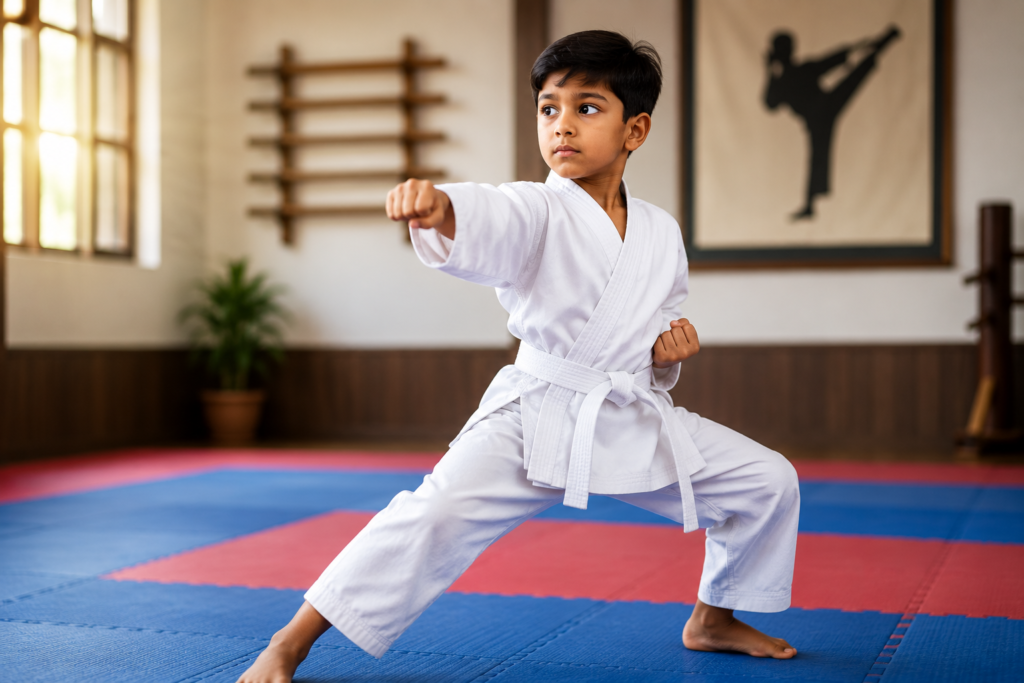
Parents often look for activities that can help children become more responsible, focused, and consistent. Does Karate Make Children More Disciplined? The answer is often yes, but discipline does not appear overnight. It develops through regular practice, clear expectations, repetition, and learning to take responsibility for progress. A good karate environment gives children practical opportunities to practise these habits while also enjoying physical activity.
For many families, the answer becomes clearer when they notice these habits developing gradually.
What Does Discipline Mean for a Child?
For children, discipline is not simply about obeying adults or following rules without question. Healthy discipline means learning how to manage behaviour, follow routines, complete tasks, respect boundaries, and keep trying when something feels difficult.
Does Karate Make Children More Disciplined? Karate training naturally includes routines and expectations. Students learn to listen when an instructor speaks, follow directions, practise techniques correctly, and behave respectfully with training partners.
Over time, these small habits can become part of a child’s everyday behaviour. The goal is not to make children fearful of making mistakes. Instead, the goal is to help them understand that progress comes from consistent effort.
How Karate Training Encourages Discipline
A structured class gives children a predictable routine. They may begin with a warm-up, move through basic techniques, practise combinations or forms, and finish with stretching or other activities. Following this sequence teaches children to pay attention and stay engaged.
Does Karate Make Children More Disciplined? Regular training can certainly support this development because students repeatedly practise listening, waiting their turn, following instructions, and completing activities before moving on.
1. Children Learn to Follow Instructions
A karate instructor gives demonstrations and instructions that students need to understand and apply. Children learn that rushing through an exercise is not always the best approach. They need to listen carefully, watch the technique, and then practise it.
This can strengthen attentive behaviour outside the dojo as well. A child who becomes accustomed to listening during class may gradually become more willing to listen during homework, classroom activities, or conversations at home.
2. Regular Practice Builds Consistency
Discipline grows through repetition. A child cannot expect to master a technique after trying it once. They need to return to practice, correct mistakes, and repeat the movement.
This is where the question Does Karate Make Children More Disciplined? becomes especially relevant. The value is not only in the techniques themselves. It is in teaching children that meaningful improvement usually requires patience and consistent effort.
3. Belt Progress Gives Children Clear Goals
Karate provides children with milestones that can make progress easier to understand. As students train, they work toward learning new techniques, improving existing skills, and progressing through the grading system.
When children see that effort contributes to progress, they can develop a stronger connection between commitment and results. This lesson can be useful in schoolwork, music, sports, and other areas of life.
How Karate Teaches Children Responsibility
Discipline and responsibility are closely connected. A child who is learning responsibility begins to understand that their actions and choices affect their progress.
Students can learn to arrive prepared, look after their equipment, wear the appropriate uniform, and treat the training space respectfully. Does Karate Make Children More Disciplined? The routine gives them regular opportunities to practise responsibility instead of only hearing about it.
4. Children Learn Respect and Self-Control
Respect is an important part of martial arts training. Children learn to interact appropriately with instructors and fellow students. They also learn that physical skills must be controlled and used responsibly.
Self-control is particularly important. Students may be energetic and excited, but training teaches them when to move, when to stop, and how to respond appropriately to instructions.
These lessons can help children understand that being strong is not about reacting impulsively. Real confidence includes knowing how to control one’s actions.
5. Karate Helps Children Understand Consequences
Children learn through experience. If a student does not practise regularly, they may find a technique difficult. If they do not listen carefully, they may need additional explanation. If they consistently put in effort, they may notice improvement.
These natural consequences can be more meaningful than repeated lectures about discipline. Instead of simply being told to work harder, children begin to see why effort matters.
Can Karate Discipline Help at Home and School?
The habits developed during training can sometimes transfer to other parts of a child’s life. However, parents should not expect karate alone to change every behaviour.
A supportive home environment remains important. Parents can reinforce the same ideas by creating reasonable routines, praising effort, setting clear expectations, and allowing children to take age-appropriate responsibility.
When parents ask, Does Karate Make Children More Disciplined? they should think of karate as one part of a child’s development rather than a quick solution. The strongest results usually come when training, parenting, and school expectations support one another.
Creating a Positive Attitude Toward Discipline
Children respond better when discipline is connected to encouragement and purpose. An instructor who explains why a rule matters can help students understand rather than simply obey.
For example, standing properly is not only about looking organised. It can help students prepare their bodies and minds for training. Respecting another student is not just a classroom rule; it helps create a safe and positive learning environment.
This approach makes discipline feel like a skill that children can develop, rather than a punishment imposed on them.
The Role of the Instructor
The instructor has a major influence on how children experience discipline. Does Karate Make Children More Disciplined? The answer is strongly influenced by the quality of that learning environment.
A good instructor sets clear boundaries while remaining patient, encouraging, and consistent.
Children need correction, but they also need to know that mistakes are a normal part of learning. When instructors show children how to improve instead of embarrassing them for mistakes, students are more likely to stay motivated.
International karate training canalso expose students to structured standards and a wider martial arts culture, depending on the programme and opportunities available. Families may also encounter the search phrase “karate tarining” when comparing local classes, although the quality of the programme matters more than the wording used in a search.
Parents should look for an academy where instructors prioritise safety, respect, age-appropriate teaching, and long-term development. The atmosphere matters just as much as the techniques being taught.
What Parents Can Do to Reinforce Discipline
Parents can make the lessons from karate more effective by supporting simple habits at home.
Encourage your child to attend training regularly and arrive on time. Ask what they learned rather than focusing only on belt advancement. Celebrate persistence when they find a technique challenging. Give them small responsibilities, such as preparing their training clothes or packing their equipment.
Most importantly, avoid presenting karate as a punishment or using training as a threat. Children are more likely to develop positive habits when they understand the value of what they are doing.
Karate Training and Long-Term Character Development
One of the most valuable aspects of martial arts is that development happens gradually. A child may initially join because they enjoy kicking, punching, movement, or the excitement of earning a belt. With time, they may begin to appreciate patience, consistency, respect, and self-control.
Does Karate Make Children More Disciplined? For many children, the structured environment can be an effective way to practise these qualities repeatedly.
The benefits also depend on the child, the instructor, the training environment, and the support they receive outside class. Karate should not be viewed as a guaranteed behavioural solution. Instead, it can provide children with a practical setting in which positive habits are taught and reinforced.
Does Karate Make Children More Disciplined? Regular exposure to this structure can help children practise discipline until it becomes more familiar.
Why Nochikan Karate Can Be a Positive Choice
For families considering martial arts, choosing the right academy is an important decision. Look for qualified instructors, a safe training environment, appropriate classes for different age groups, and a teaching approach that balances discipline with encouragement.
Nochikan karate can be part of a child’s journey toward becoming more confident, responsible, and consistent. The aim should be to help children enjoy learning while gradually developing habits that can support them beyond the training floor.
Conclusion
Does Karate Make Children More Disciplined? It can play a meaningful role in developing discipline when training is regular, expectations are clear, and instructors and parents provide consistent support. Children learn to listen, practise, wait, persevere, respect others, and take responsibility for their progress.
The most important lesson is that discipline is not something children simply receive from an activity. It is a habit they develop through repeated actions. Karate can give them the structure and practice they need to build that habit over time.
