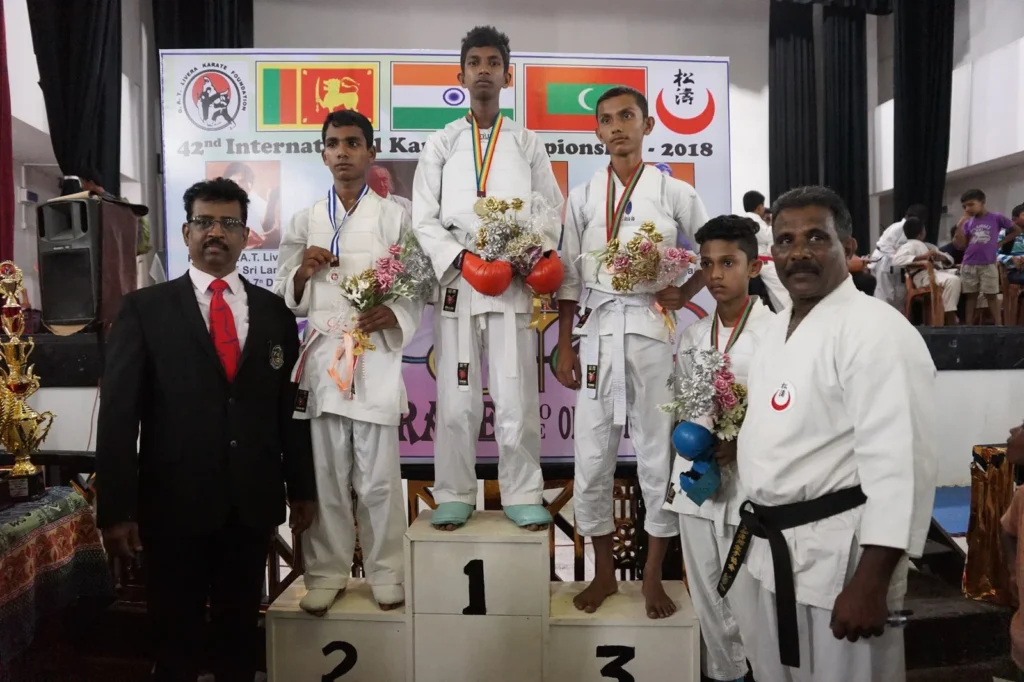
History Of Karate
Origins of Karate
Karate originated in Okinawa, Japan, though it was heavily influenced by Chinese martial arts. The word “Karate” comes from “kara” (empty) and “te” (hand), meaning “empty hand.”
Thousands of years ago, Okinawa was a peaceful island until outside forces threatened its people. Chinese travelers had already visited the island, bringing their martial arts techniques, which influenced the development of Karate. The art also absorbed contributions from Korea over time.
Another key figure in martial arts history is Bodhidharma, an Indian monk who traveled to China and introduced exercises that became known as Shaolin Temple Boxing, which inspired modern Kung Fu and influenced Karate.
Over time, Karate evolved to become more than just a fighting technique. It was formalized into Okinawan schools and eventually spread globally:
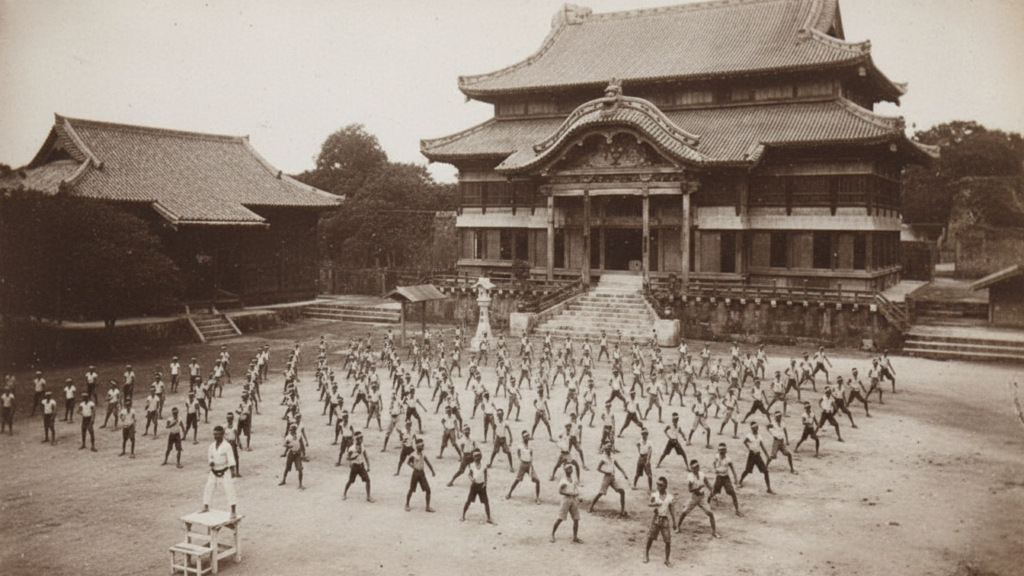
1917: Gichin Funakoshi demonstrated Shotokan Karate-do publicly.
Gichin Funakoshi, the founder of Shotokan Karate-do, gave the first public demonstration of Karate, marking a major step in introducing this martial art beyond Okinawa.
1924: The first university karate club in Japan was established.
The first university karate club was established in Japan, helping Karate gain recognition as a formal discipline and part of physical education.
1930s: Karate reached Canada.
Karate spread beyond Asia and reached Canada, beginning its journey into Western countries and international practice.
1945: The first dojo opened in the USA.
The opening of the first dojo in the USA marked Karate’s strong entry into the Western world and increased global interest in the art.
1950s: Karate gained popularity in the UK.
Karate was introduced in the UK, where it quickly gained popularity and attracted practitioners across Europe.
1989: Karate became officially accepted in the Soviet Union.
After being banned and unbanned several times, Karate was officially accepted in the Soviet Union, securing its place as a recognized martial art.
Karate continues to inspire people worldwide and remains a respected martial art today.
What is Karate
Karate is a striking martial art using punches, kicks, elbows, knees, and open-hand techniques. It is also practiced for self-defense, fitness, and competition.
Key principles of Karate:
- Kihon: Basic techniques like punches, kicks, blocks, and stances.
- Kata: Choreographed movements representing real-life fighting situations.
- Kumite: Sparring, applying techniques learned in Kihon and Kata.
Karate develops strength, flexibility, coordination, mental discipline, and focus, while also being enjoyable and rewarding.
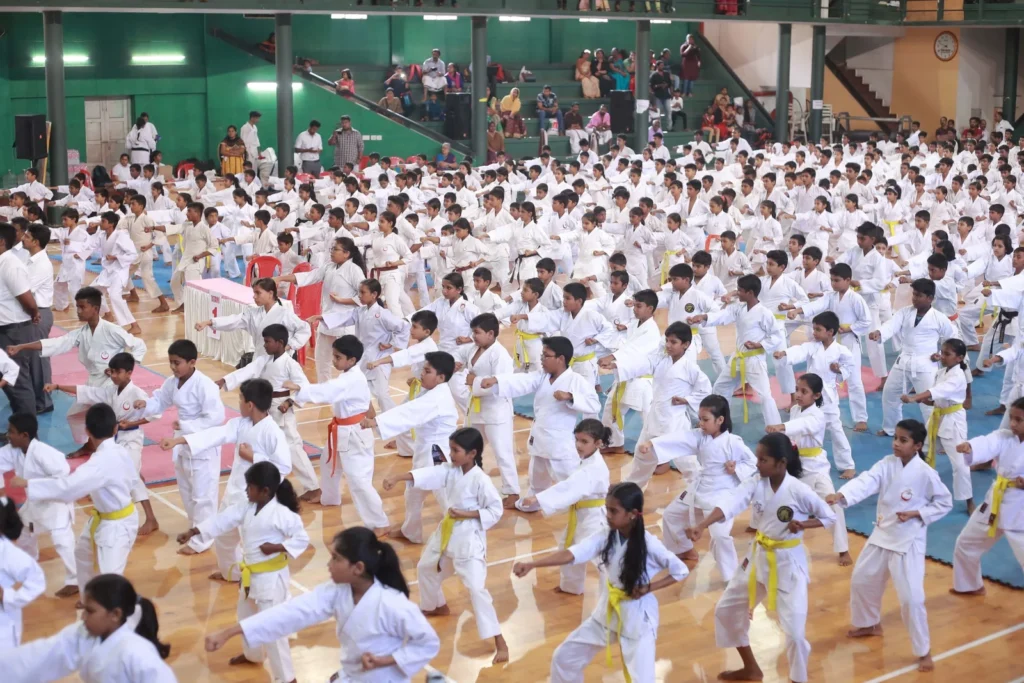
Why Choose Nochikan Karate International
Nochikan Karate International is a world-renowned karate academy offering classes for all ages and skill levels.
Our instructors are highly qualified and experienced, dedicated to helping students reach their full potential.
We believe Karate is more than a martial art—it’s a way of life that teaches:
- Discipline
- Respect
- Self-confidence
Our goal is to provide positive and enriching experiences for all students.
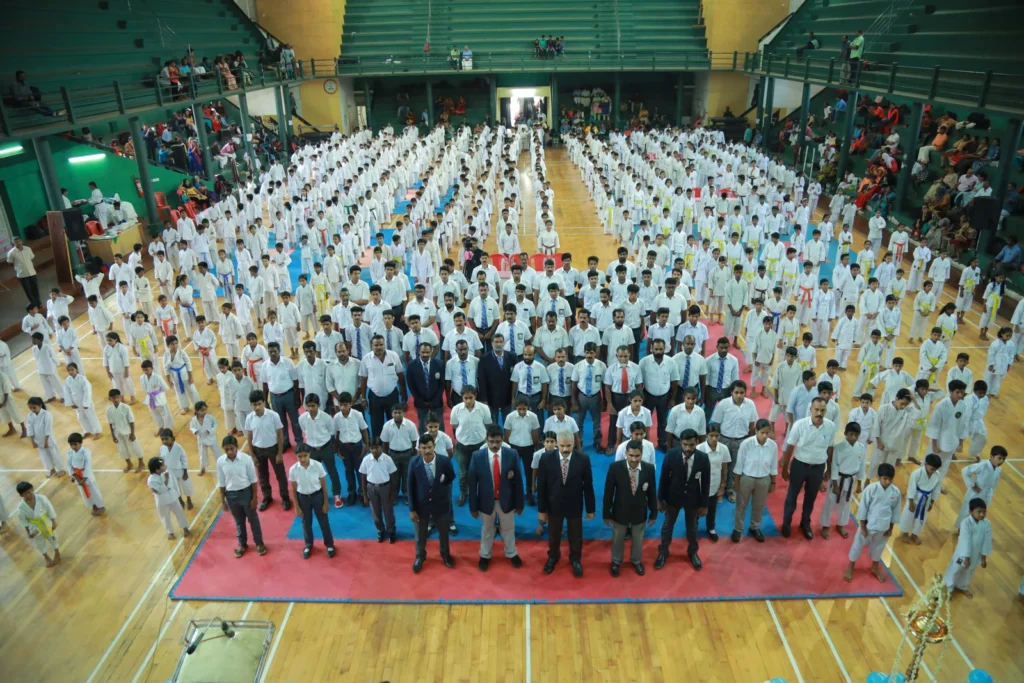
Benefits of Karate
Karate provides numerous physical, mental, and emotional benefits, including:
- Increased self-confidence
- Improved discipline
- Enhanced focus and concentration
- Reduced stress and anxiety
- Promoted overall well-being
Karate is ideal for anyone looking to improve physical and mental health while learning a respected martial art.